


Arabica vs Robusta Coffee Beans: Which Is Better?
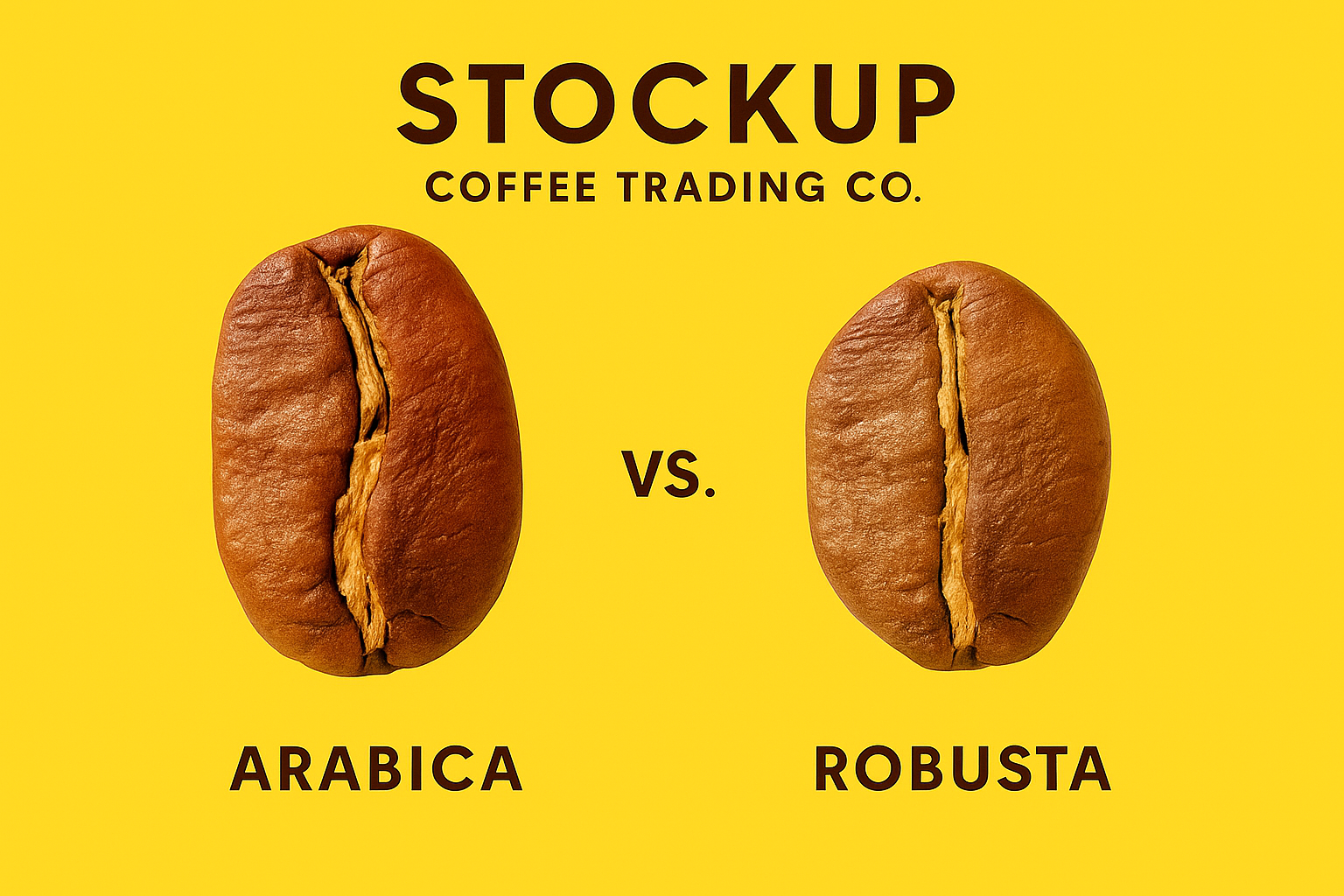
When it comes to coffee, one question comes up more than any other: Arabica vs Robusta, which one is better?
If you’ve ever stood in front of a coffee shelf wondering what the difference is, you’re not alone. In this article, we’ll cover everything you need to know: flavor, caffeine, price, bean species, and the best uses for each. By the end, you’ll know exactly what’s in your cup and which type of coffee suits your taste.
What Are Arabica and Robusta?
Arabica coffee (Coffea arabica) likely started in the highlands of Ethiopia and then spread through Yemen to become the backbone of the global coffee trade. Today, Arabica makes up roughly 60 to 70 percent of the world’s coffee production because it is prized for smooth, nuanced flavors and the sweeter, more complex cup that specialty coffee lovers seek.
Robusta coffee (Coffea canephora) comes from Central and West Africa and is known for being tough and high-yielding. Robusta plants grow well at lower altitudes, tolerate heat and pests better than Arabica, and are often used in espresso blends and instant coffee where a bolder, more bitter flavor and a thicker crema are desirable. Robusta is also valued for producing more caffeine per bean, which gives it that extra punch.
Key Differences Between Arabica and Robusta
|
Feature |
Arabica Coffee Beans |
Robusta Coffee Beans |
|---|---|---|
|
Taste & Aroma |
Smooth and sweet with floral or fruity notes. Often has more acidity and a cleaner finish. |
Bold, bitter, and earthy with a heavier body. Sometimes has nutty or woody tones and produces a thicker crema. |
|
Caffeine Content |
Around 1.2% caffeine. Lower caffeine content compared to Robusta. |
Ranges from 2.2% to 2.7% caffeine. Almost double the caffeine of Arabica. |
|
Price |
Generally more expensive due to delicate growing conditions, handpicking, and higher pest sensitivity. |
Usually more affordable since Robusta plants are tougher and produce bigger harvests. But prices are rising with the growing demand for instant coffee. |
|
Bean Shape & Appearance |
Oval-shaped with a curved crease and a more elongated form. |
Rounder and smaller with a straight crease. |
|
Growing Regions & Altitude |
Grows best at higher altitudes (600–2000 meters). Common in Ethiopia, Colombia, Brazil, and India. |
Thrives at lower elevations (sea level to 600 meters). Grown widely in Vietnam, Uganda, Indonesia, and parts of India. |
Taste and Brewing
Arabica beans are known for their smooth, sweet flavor, often with hints of fruit or floral notes. They're a favorite for pour-over, drip coffee, cold brew, and other specialty brewing methods where subtle flavors and acidity can shine.
Robusta beans, on the other hand, bring a bolder, more bitter taste with earthy or nutty undertones. They're a popular choice for espresso, thanks to their rich body, strong flavor, and thick crema. You'll also find Robusta used in most instant coffee blends because of its higher caffeine content and lower cost.
Price and Quality
Arabica coffee tends to cost more because it’s harder to grow. It thrives at higher elevations, requires specific climates, and is often handpicked to preserve quality. All of this contributes to its reputation as a premium bean.
Robusta coffee used to be seen as the budget option, but that’s changing. With growing demand for instant coffee and large-scale sourcing by major brands, prices are on the rise. At the same time, carefully grown Robusta is starting to gain respect in the specialty coffee world.
How Is Arabica and Robusta Grown in India Different from the Rest of the World?
India holds a unique place in the coffee world. It is one of the few countries where both Arabica and Robusta are grown under shade, in subtropical climates, often alongside spices like cardamom, pepper, and cinnamon. This intercropping adds subtle flavor notes that set Indian coffee apart, even from regions like South America with similar weather.
Arabica in India
- Grown mainly in the Western Ghats, across Kerala, Karnataka, and Tamil Nadu
- Cultivated at altitudes of 900 to 1,600 meters, with rich loamy soil and consistent rainfall
- Known for its smooth body, mild acidity, and delicate hints of spice, fruit, and chocolate, influenced by nearby spice farms
Robusta in India
- Typically grown at lower elevations, between 200 and 800 meters, especially in Karnataka and Kerala
- Beans are denser and creamier, creating a thick crema when brewed, which makes them ideal for espresso and instant coffee
- Flavor is often described as earthy, nutty, and slightly spiced, standing apart from the more bitter profiles of African and Vietnamese Robustas
What makes Indian coffee unique?
- Shade-grown tradition supports biodiversity and promotes sustainable farming
- Spice influence from surrounding crops naturally enhances the coffee's aroma and depth
- Monsooned Malabar process, a method unique to India, exposes beans to seasonal winds, creating a mellow, low-acid cup with a distinctive character
While Arabica and Robusta grown in other countries have their own appeal, Indian coffee offers something truly distinct. It is smooth, aromatic, and full of layered complexity shaped by nature, climate, and culture.
Which Coffee Beans Should You Choose?
Choose Arabica coffee beans if you enjoy smooth, sweet flavors with a fragrant, more delicate profile. It’s a favorite among specialty coffee drinkers and anyone who likes to savor their brew.
Go for Robusta beans if you prefer a stronger, more bitter taste or want that extra boost of caffeine. It's a solid pick for espresso lovers or anyone looking for a budget-friendly option.
Not sure where to start? Try both. Arabica beans bring elegance and complexity, while Robusta adds boldness and power. Many coffee blends combine the two to create a balanced cup with flavor and strength.
Common Questions About Arabica and Robusta
Does Arabica have more caffeine than Robusta?
No. Robusta coffee beans contain nearly twice the caffeine of Arabica. That’s one reason they’re often used in espresso and instant coffee blends.
Why is Arabica considered “premium”?
Arabica is more delicate to grow. It thrives at higher altitudes, requires more care, and produces a smoother, more complex flavor. These factors make it the preferred choice for specialty coffee.
Is Indian coffee good quality?
Yes. India produces high-quality Arabica and Robusta, often grown under shade and intercropped with spices. This unique growing method gives Indian coffee distinct flavor notes that stand out in the global market.
Which is better for espresso, Arabica or Robusta?
Both have their strengths. Robusta is commonly used for its bold flavor and thick crema. Arabica adds complexity and aroma. Many espresso blends combine the two for the best of both worlds.
Is instant coffee made from Robusta?
Yes, most instant coffee is made from Robusta beans due to their strong flavor, higher caffeine content, and lower cost. However, some premium instant coffees may also include Arabica.